- Rustic Flute
- Posts
- 📊When Wars Move Markets
📊When Wars Move Markets
What Geopolitical Conflict Means for AI and Chips

Rustic Flute
22 Mar • Read: 2 minutes

Hey there!
It’s Sparsh here!👋
The relationship between war and technology has always been tight. But what is playing out right now, across the Middle East, the US-China standoff, and the AI arms race, is different in speed and scale. If you have capital in tech, semiconductors, or AI, the ground beneath you is moving. 🌍
Let’s dive in to know more.🚀
🔬 Silicon Is the New Oil
Military planners in Washington now treat semiconductor supply chains with the same urgency they once reserved for oil. 🛢️
The F-35 runs on over 8 million lines of code. Drones, hypersonic missiles, and satellites — all of them need advanced chips to function. 💡
Cut off the chip supply, and you do not just hurt earnings. You degrade a nation's ability to fight.
This is not a prediction.
Russia, cut off by sanctions, reportedly pulled chips from dishwashers and car parts to keep its military hardware running. China found workarounds after US export controls blocked ASML machines, and Huawei still shipped a 5G phone on a domestic chip. Adaptation happens fast when survival is the motivation. ⚙️
Chips are no longer just a product category. They are a geopolitical asset class. 🌏️
🌐 The Hidden Middle East Risk
Most people outside the semiconductor industry do not know this: Qatar supplies over one-third of the world's helium. Not for balloons. For chip manufacturing, heat management and lithography processes that make modern semiconductors possible. 🧪
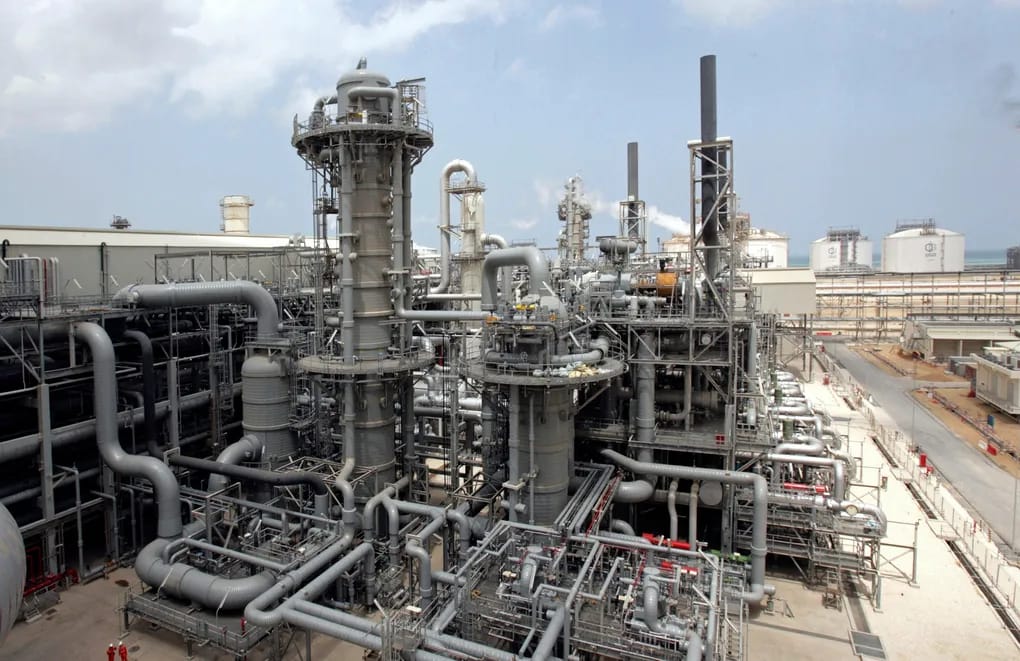
Taiwan imports 97% of its energy. Its LNG reserves cover roughly 11 days of demand.
If the Strait of Hormuz faces disruption, Taiwan's fabs face a power problem. If Qatar's helium supply tightens, TSMC faces a materials problem. Either way, Nvidia, Apple, and every AI startup dependent on hardware availability feel it downstream. 📉
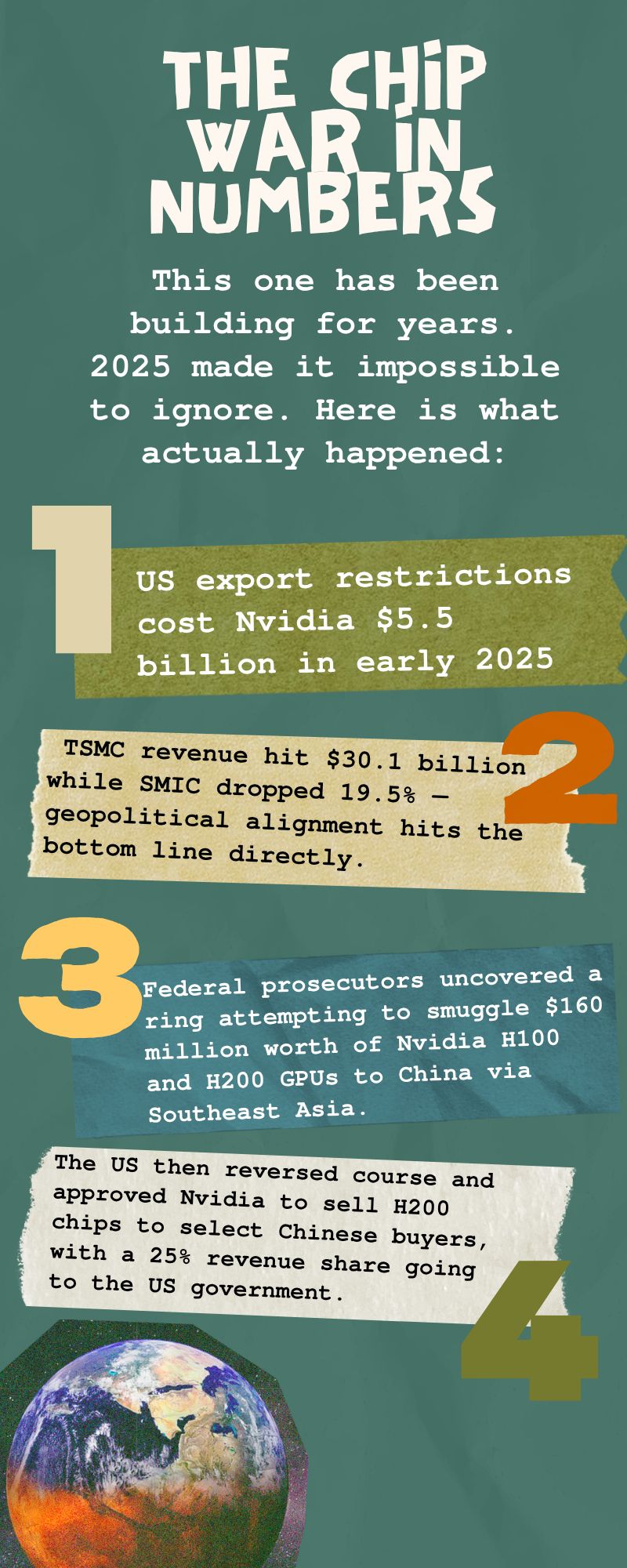
One quarter, a sale is illegal. The next, it is a revenue-sharing deal. For any founder building a hardware-dependent product, this planning environment is brutal. For an investor paying attention, it is where the opportunities hide. 🎯
💸 What to Actually Do With This
Enterprise AI spending is up 36% year over year. GPU cloud costs rose 40 to 300% depending on region. The demand is real — and it is running into a supply chain that cannot scale at software speed. ⚡
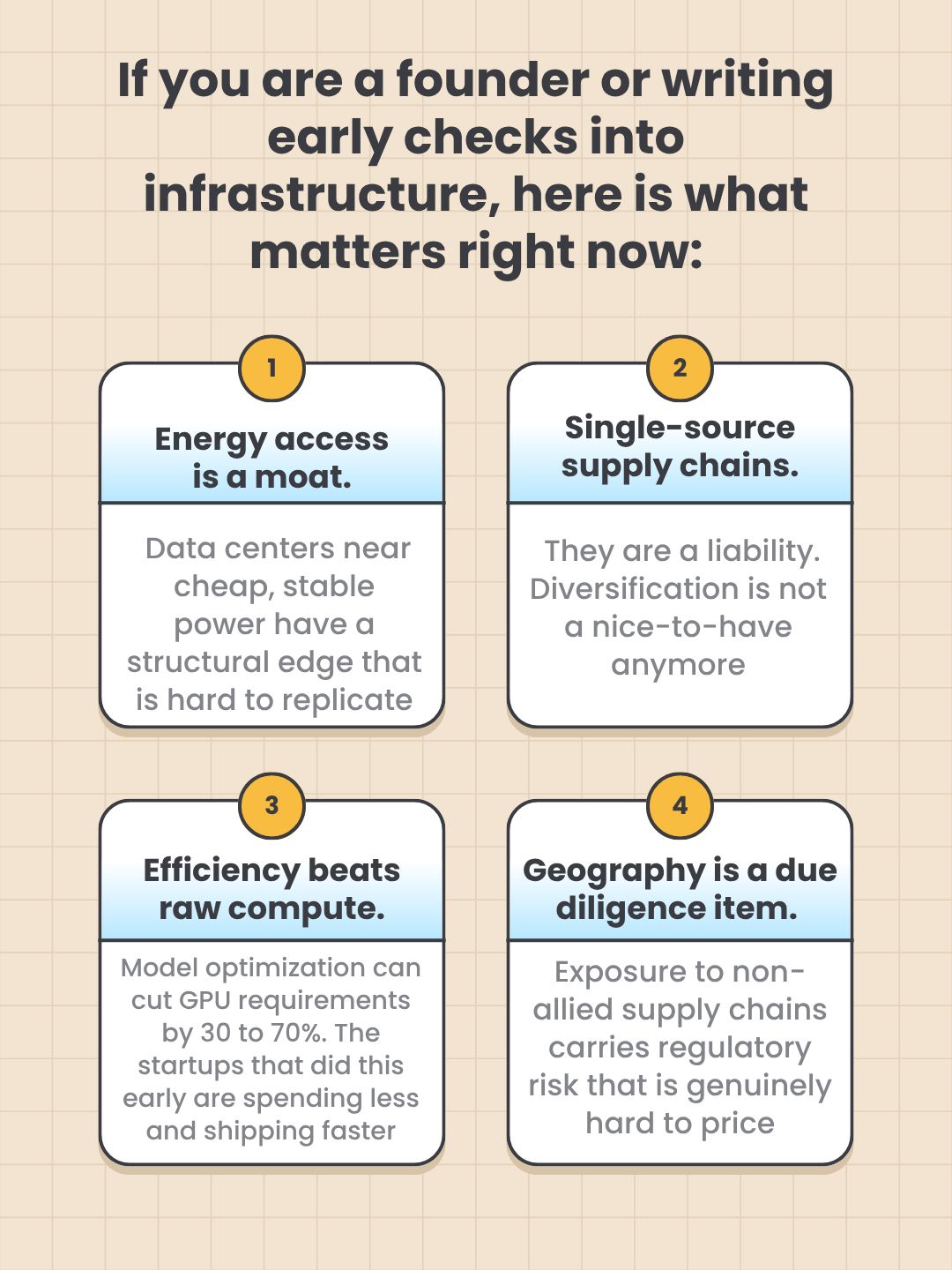
🧭 Where India and the US Fit
For Indian founders and investors:
India is not competing with TSMC today — and that is fine. The real opportunity is in the layer above: AI model development, chip design tooling, defence-adjacent software, and energy optimisation for data centres. The chip war creates demand that does not require you to be in the fab business. 🇮🇳
For US investors:
The CHIPS Act money is real, but rebuilding TSMC's process expertise domestically takes years, maybe a decade. The US Air Force estimates 90% of its precision-guided munitions rely on TSMC chips. That concentration risk is not going away anytime soon. 🇺🇸
🔭 The Bottom Line
Nobody walks away from this cleanly. Not the US, not China, not the companies stuck in between. 📊
The $650 billion in global AI investment planned for 2025 is running headfirst into supply chains never designed for this level of political pressure. The founders and investors who treat geopolitics as someone else's problem will feel it in their margins before they understand what hit them. ⛓️
The ones who factor it in now will find that disruption, handled right, tends to look a lot like opportunity. 📈
 That’s me when I see you refer! You can forward this email and ask them to click the link 🙏🙏. | I pour my heart into crafting this email every week for free. It would mean the world to me if you could share Rustic Flute with just one person you think would love it, too. Here's your unique referral code: |
It has been a pleasure! I will see you next week. Until then, Stay motivated! Stay strong! Cheers!
Reply