- Rustic Flute
- Posts
- 📚Lessons from the Land of "Almost"


Hey there!
It’s Sparsh here!👋
The year 2025 saw its share of ambitious startups in both India and the US, many of which, despite initial promise, ultimately failed to carve out a lasting name. For every success story, there are countless lessons embedded in these ventures that struggled to gain traction or sustain growth. 📈
By examining these cases, investors and founders can glean critical insights to better navigate the dynamic and often brutal startup landscape. 💡
Let’s dive in to know more.🚀
💸 Overfunding Without Product Market Fit
One prominent trend in 2025 was the premature scaling of startups that hadn't truly validated their core offering.
Many ventures, especially in the US, secured significant early-stage funding based on compelling pitches and strong teams. However, this capital often led to aggressive hiring and marketing before the product had genuinely resonated with its target audience. 💰
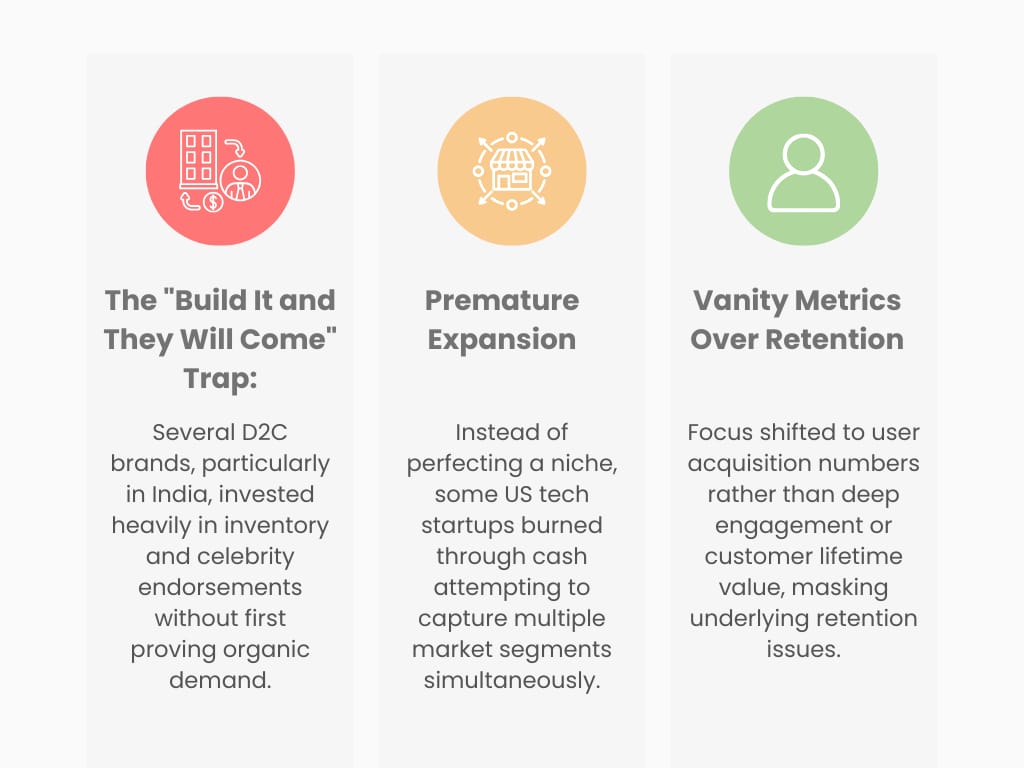
This highlights a fundamental truth: capital can accelerate growth, but it cannot create product-market fit. Founders must relentlessly pursue validation before pouring fuel on the fire. 🔥
🌍 Ignoring Local Nuances in Global Markets
The "one-size-fits-all" approach proved to be a costly miscalculation for several cross-border ventures. 🧮
While globalisation offers immense opportunities, the specific cultural, economic, and regulatory landscapes of markets like India require tailored strategies. Several US-based startups that attempted to directly port their models to India, or vice versa, stumbled in 2025. 🗺️
Failed Approach | Market Miss | Key Takeaway |
High-end Pricing | Indian Tier 2/3 cities | Value perception is critical; affordability often trumps premium. |
Western UI/UX | Rural Indian users | Digital literacy and connectivity constraints demand simpler interfaces. |
Rapid Expansion | Complex regulatory environment | India's varied state laws require a phased, compliant approach. |
This isn't just about language; it's about understanding consumer behaviour, local payment preferences, and distribution challenges. Local talent and deep market immersion are non-negotiable. 🤝
💡 The Innovation Illusion
Some startups suffered from building solutions to problems that didn't genuinely exist, or from failing to differentiate in crowded markets. 📊
Innovation for its own sake, without a clear problem statement or a demonstrable competitive advantage, became a significant pitfall. In both the US and India, we saw several “copycat“ apps and platforms that offered marginal improvements but lacked a compelling reason for users to switch. 🧐
✨ Novelty Over Necessity: Technologies like advanced AR/VR in consumer retail, while cool, often failed to solve a real, everyday pain point for the average user in 2025.
😴 Lack of Moat: Many B2B SaaS startups found themselves easily replicated by larger competitors once their initial traction became apparent, lacking proprietary tech or network effects.
🔄 Ignoring Incumbents: Underestimating the ability of established players to adapt or acquire niche solutions proved fatal for some challengers.
For founders, this means rigorously questioning the "why" behind their innovation. For investors, it means scrutinising the "defensibility" of a startup's offering. A truly unique value proposition is the bedrock of long-term success. 🧱
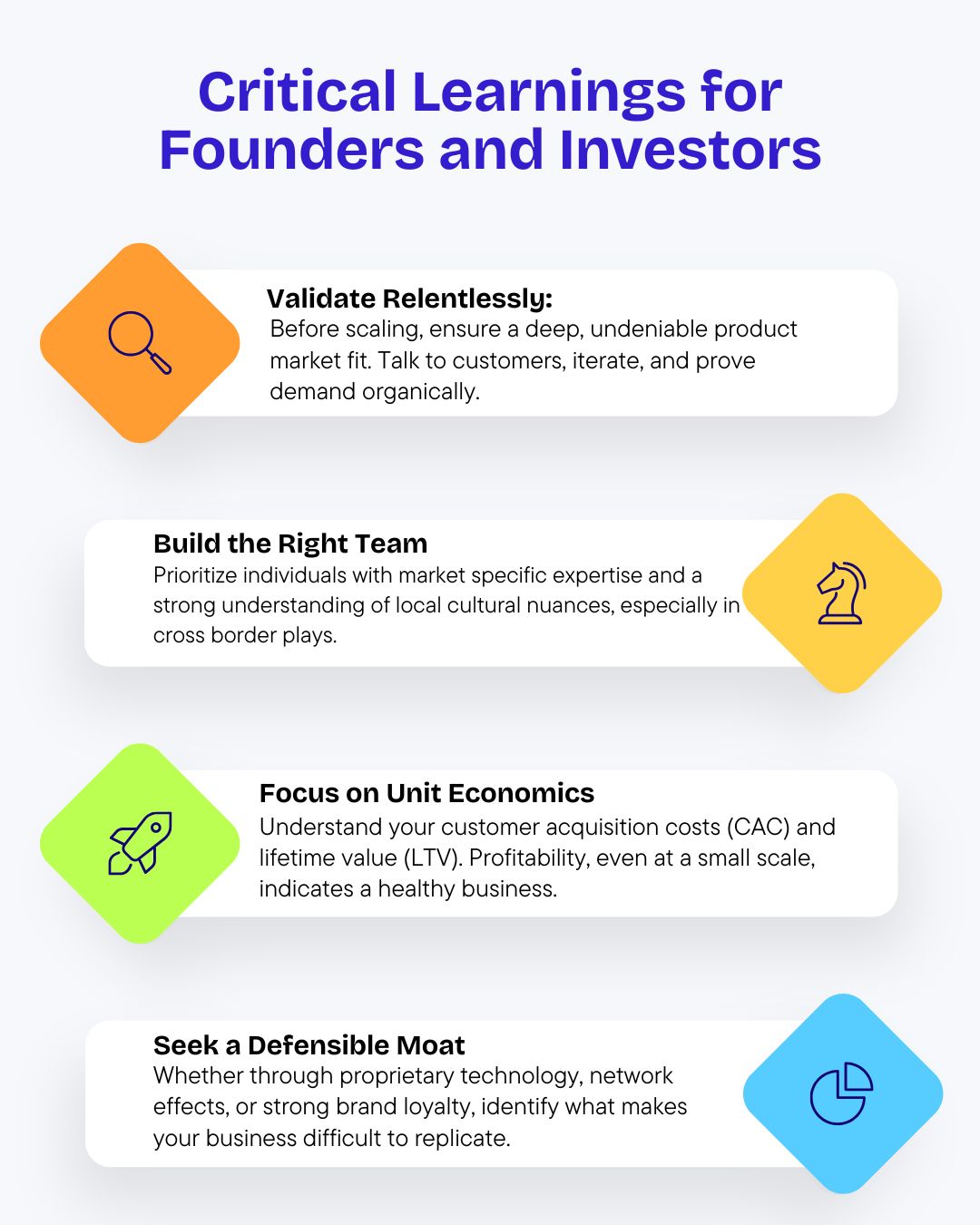
The failures of 2025 serve not as a deterrent but as a potent playbook for resilience and strategic clarity. By internalising these lessons, we can collectively build more robust, impactful, and enduring ventures in the years to come. 🌱
 That’s me when I see you refer! You can forward this email and ask them to click the link 🙏🙏. | I pour my heart into crafting this email every week for free. It would mean the world to me if you could share Rustic Flute with just one person you think would love it, too. Here's your unique referral code: |
It has been a pleasure! I will see you next week. Until then, Stay motivated! Stay strong! Cheers!
Reply