- Rustic Flute
- Posts
- ⛽ Fueling the Future


Hey there!
It’s Sparsh here!👋
While the 2024–2025 period was about AI adoption, 2026 is becoming the year of energy resilience. A series of supply chain disruptions in West Asia has pushed global crude prices toward $100 per barrel. 🧯
For the investor and startup community, this is where the "burn rate" becomes literal. 🔥
Let’s dive in to know more.🚀
🍽️ The Cloud Kitchen Crisis
📊 The Metric that Matters: The Centre recently implemented a 20% limit on average monthly commercial LPG supplies to prevent hoarding.
➡️ For the $3.7 billion cloud kitchen market, this isn't just a hurdle—it’s a wall. With an 80% reduction in available fuel, the industry's reliance on LPG is proving to be its greatest liability. 📉
➡️ In tech hubs like Hyderabad, thousands of gig workers for platforms like Swiggy and Zomato are already feeling the ripple effects as kitchens scale down operations or shut doors entirely. 📦
➡️ Founders are now scrambling to pivot to e-cooking and induction, which has suddenly become more cost-effective than piped gas in urban centres. 🍳
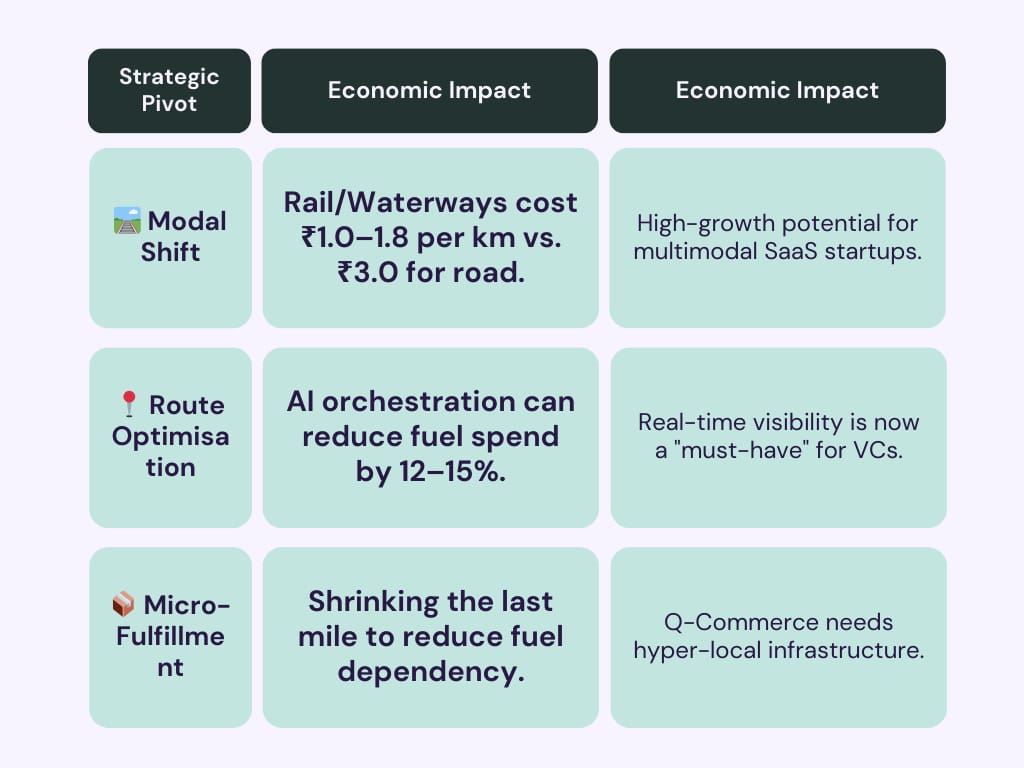
🚛 The "Efficiency-First" Mandate
With India's crude oil import dependency hitting 88%, the exposure is massive. 🛢️
🚗 The Industrial Gas Squeeze
The fuel crunch isn't limited to cooking; it’s hitting the heart of the “Make in India” engine. 🇮🇳
🏭 The 80% Allocation Rule: Under the Natural Gas (Supply Regulation) Order, 2026, manufacturing units and general industrial consumers are now capped at 80% of their past six-month average consumption.
🛠️ Refinery Redirects: The government has invoked the Essential Commodities Act to force refineries to maximise LPG yields. Critical hydrocarbon streams like propane and butane are being diverted away from petrochemical production and into the domestic cooking pool.
📉 Fertiliser Fragility: To protect the agricultural chain, fertiliser plants are prioritised but still capped at 70% supply, creating a potential downstream risk for ag-tech startups and food security.
🌿 The "Green" Goldmine
Where there is a bottleneck, there is a billion-dollar opportunity. The current crisis is fast-tracking India’s goal to attract $300–$350 billion in clean energy investment by 2030. 💵
💧The Hydrogen Play: The National Green Hydrogen Mission is expected to mobilise over ₹8 lakh crore in investments, aiming to slash fossil fuel imports by ₹1 lakh crore annually. This creates a massive secondary market for startups specialising in electrolyser components and specialised maritime storage.
💨The Biogas Shift: Government mandates now require city gas companies to begin Compressed Bio Gas (CBG) blending by Q2 2026, with a target of 5% blending by 2028. For rural startups, this offers a more sustainable "one-time subsidy" model compared to recurring LPG payments.
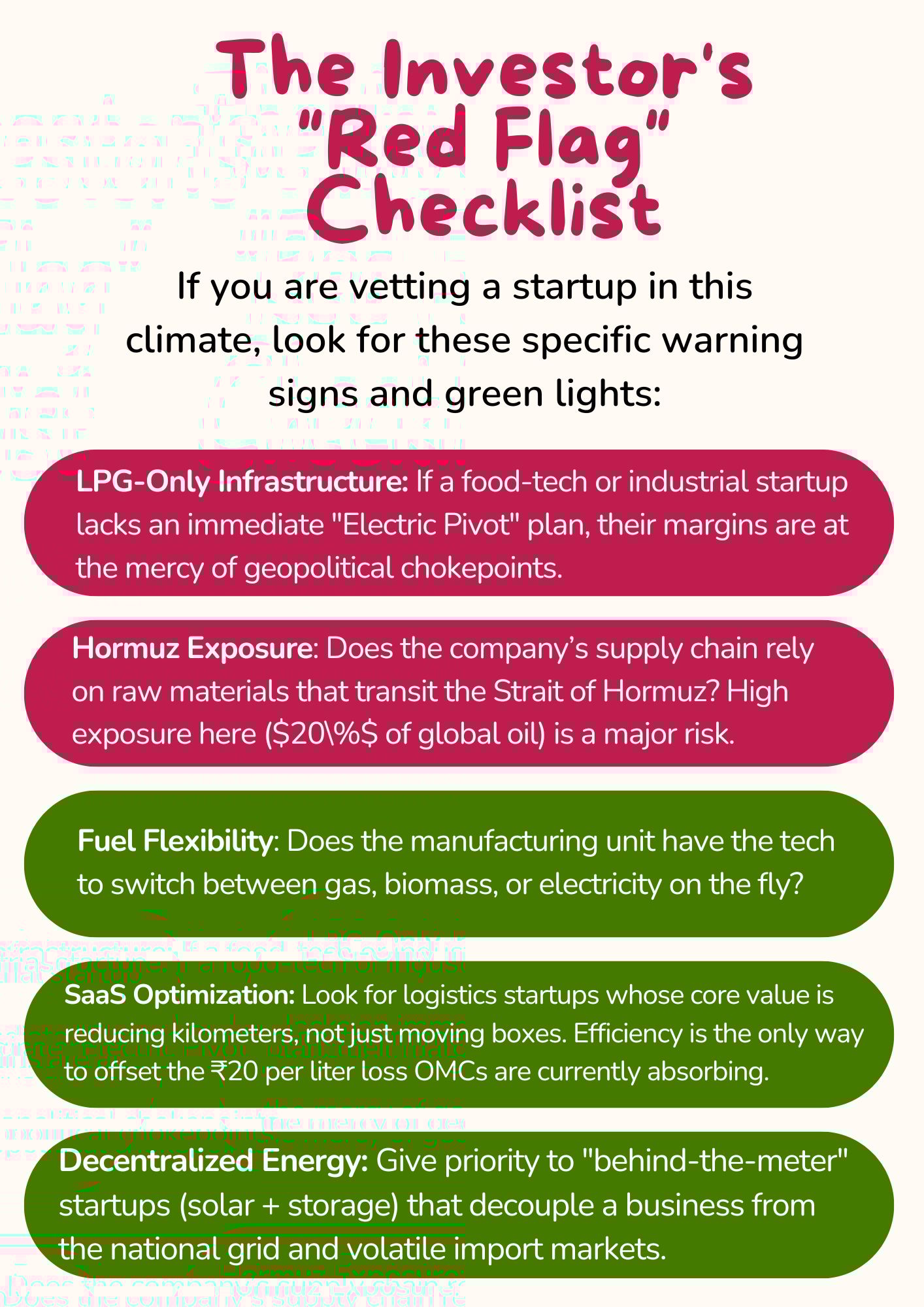
🧐 The Bottom Line
In 2026, resilience is the new growth. Startups that can decouple their business models from fossil-fuel volatility—whether through EV fleets, decentralised solar, or battery storage systems—will be the ones attracting the next wave of VC interest. 🔋
 That’s me when I see you refer! You can forward this email and ask them to click the link 🙏🙏. | I pour my heart into crafting this email every week for free. It would mean the world to me if you could share Rustic Flute with just one person you think would love it, too. Here's your unique referral code: |
It has been a pleasure! I will see you next week. Until then, Stay motivated! Stay strong! Cheers!
Reply